
2026 and not giving a f*ck - A cultural shift contextualised
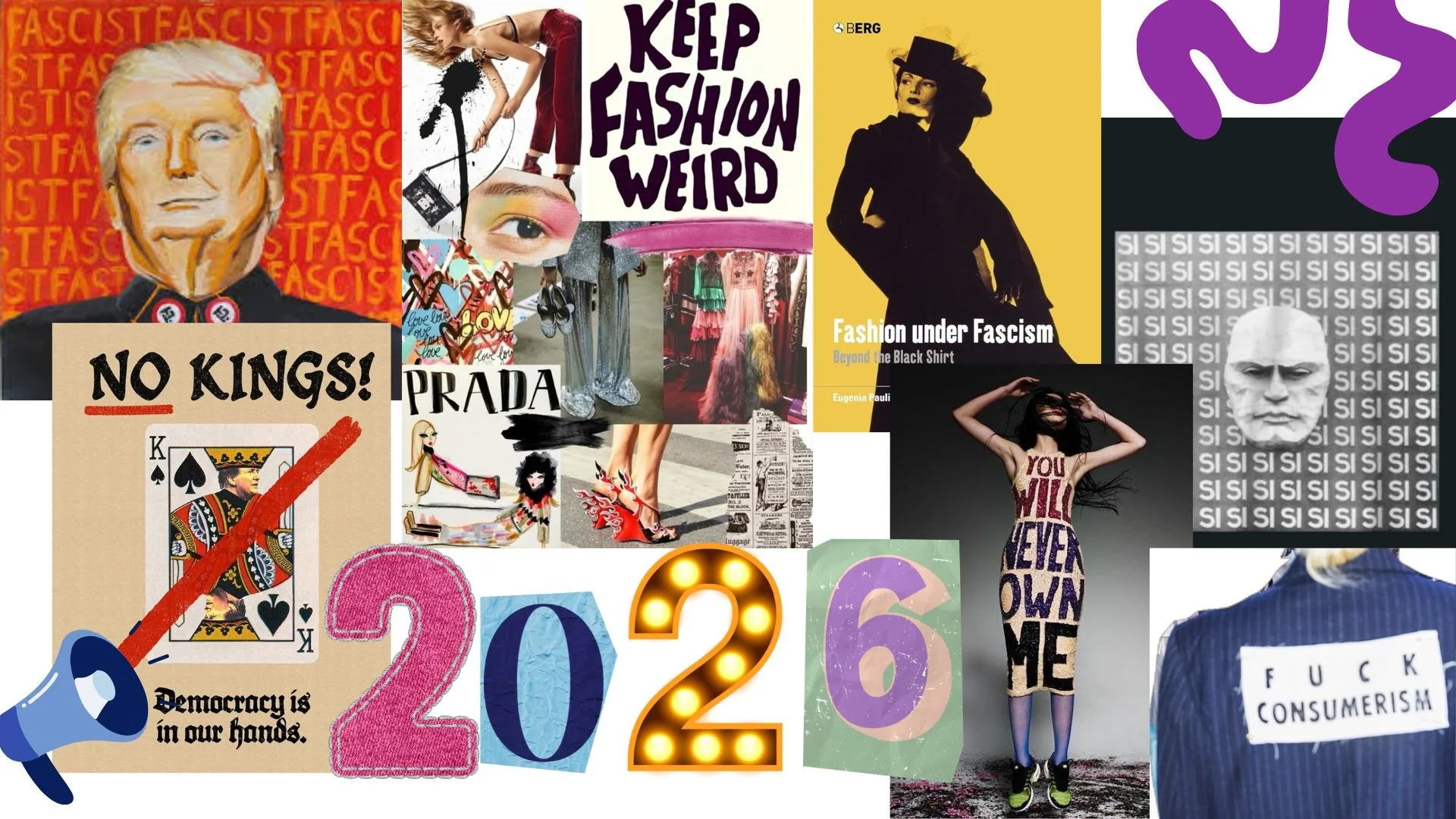
In the early moments of 2026, a clear aesthetic and cultural shift has started to emerge. Colour has returned with intent. Playfulness, excess, and visual pleasure are no longer frivolous but deliberate—suggesting a collective desire to reclaim joy in a climate increasingly shaped by restriction, fatigue, and ideological rigidity. What appears on the surface as a stylistic turn is, in fact, deeply political.
History shows that extremist and authoritarian regimes follow a predictable arc. Early allegiance - often driven by fear, economic crisis, or promises of stability - eventually gives way to exhaustion. As power consolidates, disillusionment spreads, including those who once pledged loyalty to the system and its figureheads. Traditionally, this fracture has been made visible through riots, resistance movements, and mass protest.
In the digital age, however, dissent is no longer limited to physical confrontation. Fashion, culture, and aesthetics have become critical sites of resistance. Protest now circulates through images, silhouettes, memes, styling choices, and subcultures that reject uniformity and refuse ideological compliance. The body becomes a billboard; dress becomes language.
Against this backdrop, the resurgence of colour reads as refusal. To dress loudly in an era of enforced seriousness is to resist. To embrace excess in the face of austerity is to undermine it. Joy, once dismissed as apolitical, becomes a disruptive force—destabilising narratives that thrive on fear, control, and sameness.
What we are witnessing is not escapism but strategy. A fragmentation of resistance that favours creativity over cohesion, ambiguity over slogans. In this landscape, fashion does not merely reflect political conditions—it actively intervenes, offering new ways to assemble, to signal, and to imagine futures beyond the present order.
Alongside the global resurgence of fascism and far-right ideology, a parallel cultural shift has taken hold—particularly among younger generations. A renewed attraction to so-called “traditional” values has emerged, reframed not as regression but as aesthetic and moral clarity. Within this movement, femininity has been carefully repackaged. The rise of the trad-wife archetype, the increased visibility of Mormonism and other conservative belief systems, and the popularisation of phrases such as “embracing the divine feminine” signal a broader attempt to redefine womanhood as softer, quieter, and more compliant.
These ideals are not without appeal. Gentleness, care, devotion, and emotional attunement are meaningful and powerful qualities. But when elevated as moral imperatives rather than personal choices, they become tools of containment. What is marketed as empowerment often functions as restraint—encouraging women to shrink their presence, temper their anger, and internalise silence as virtue.
Fashion and culture reveal this tension clearly. The return of modest silhouettes, pastoral aesthetics, muted palettes, and hyper-feminised styling does not exist in isolation; it mirrors a wider ideological pressure to neutralise disruption and smooth over dissent. Softness becomes palatable, while complexity is discouraged.
Yet to be human is to occupy the full emotional spectrum. Anger, desire, ambition, grief, and contradiction are not failures of femininity but expressions of agency. To deny women access to these emotions—or to shame their outward release—is to deny them political, cultural, and personal autonomy.
In this moment, resistance may not always look loud, but it must remain expansive. True liberation lies not in choosing softness or strength, tradition or rebellion, but in refusing the false binary altogether. Fashion, culture, and self-expression offer space to reclaim multiplicity—to be gentle and furious, devout and defiant, composed and unruly—on one’s own terms.
This tightening grip on softness, obedience, and moral purity has not produced compliance—it has produced backlash. The response is not negotiation, but refusal. Not caring becomes the point. Giving a f*ck is no longer aspirational.
In fashion, this rejection is visceral. We see it in the collapse of coherence: ugly-on-purpose styling, abrasive silhouettes, hyper-sexuality colliding with austerity, irony weaponised against meaning itself. The resurgence of punk is not nostalgic—it’s strategic. This isn’t about safety pins as costume, but about reclaiming chaos in a culture desperate for order.
Designers like Demna at Balenciaga turned normcore into menace, exaggerating mundanity until it became grotesque. Rick Owens continues to build uniforms for post-collapse bodies—clothes that reject softness in favour of brutality, ritual, and refusal. Dilara Findikoglu dismantles femininity entirely, tearing apart corsetry, purity, and religious symbolism to expose the violence beneath romantic ideals. Vivienne Westwood’s legacy looms large here—not as heritage, but as instruction: dress as dissent or don’t bother dressing at all.
On the streets and online, this manifests through micro-movements rather than clean trends: DIY chaos, slutty minimalism, anti-fit tailoring, fetish references stripped of explanation, thrifted aggression, intentional ugliness. Think post-punk, early Tumblr anarchy, club kid excess—filtered through digital nihilism and late-stage exhaustion.
This is fashion that refuses to soothe. It doesn’t ask to be understood. It doesn’t care about respectability, algorithmic friendliness, or moral alignment. In an era where women are told to be quieter, gentler, more divine, the response is to be obscene, excessive, and unreadable. To take up space without permission.
The same refusal plays out ideologically. Young people are done performing purity. Done shrinking rage into palatable soundbites. Anger is no longer hidden. Pleasure is no longer apologised for. Contradiction is embraced openly. Not giving a f*ck is trendy.