
“Ballet and Opera Aren’t Dead - They’re Just Well Dressed”
If you’re online, like me and most, then you have most likely seen the controversy around Timothee Chalamet and his statement on Ballet and Opera, where he said that he doesn’t ‘want to work in ballet or opera’ as they need to be ‘kept alive’. This may have been a passing comment; many people in the arts, or admirers of the arts, did not take it that way. His New film ‘Marty Supreme’ was brought into question, with comments like ‘true artists don’t diminish other art’ and many saying it does not deserve its nominations because of his arrogance.
But let's move on from Chalamet and focus on what we’re all here for: the relevance of ballet and opera in the arts.
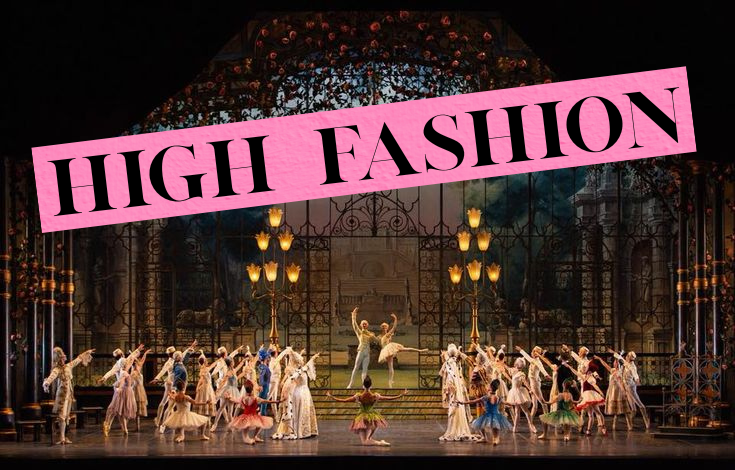
Both have long been favourite muses of the arts and of fashion. The two art forms are built on exaggeration, movement pushed to its most delicate extreme, emotion and silhouettes. The presence of passion and beauty, and how both extremes coalesce and move together on the stage. Fashion, naturally, took notes. Long before “balletcore” began circulating through Instagram mood boards and Pinterest boards, the relationship between the stage and the atelier had already been quietly choreographing some of fashion’s most enduring ideas.
Ballet, perhaps more than opera, slips easily into the language of fashion because it already speaks in fabric. Tulle, satin, silk ribbons, delicate knits, the architectural structure of a bodice, these are not simply costumes but garments engineered for both fragility and discipline. There is something endlessly fascinating about the contradiction ballet offers: extreme physical strength wrapped in visual softness. Designers have returned to this paradox again and again. It is difficult to imagine modern fashion’s obsession with lightness, transparency, and layered movement without the ever-present reference to ballerinas and their stylistic disposition in theatres.
One of the earliest and most obvious intersections appears in the collaborations between the legendary Ballets Russes and fashion designers in the early twentieth century. Under the direction of impresario Sergei Diaghilev, ballet became a laboratory for artistic collaboration. Painters, composers, and designers all contributed to the productions. The Ballets Russes worked with artists such as Pablo Picasso and costume designers including Léon Bakst, whose vibrant, theatrical costumes transformed how audiences understood stage dress. But the influence didn’t stay on stage. Designers across Europe absorbed the colour, ornamentation, and loosened silhouettes into everyday fashion.
The ripple effect reached the world of couture through figures like Coco Chanel, who famously collaborated with the Ballets Russes in the 1920s. Chanel’s fascination with dance fed directly into her design philosophy: clothes should move. Her jerseys and relaxed tailoring reflected the body in motion rather than the rigid structures that had defined earlier fashion. Ballet’s aesthetic, effortless yet controlled, became a blueprint for modern elegance.
Opera, meanwhile, contributed a different kind of influence. Where ballet shows up in chiffon and pale satin, opera arrives in velvet cloaks and impossible gowns. Opera introduced fashion to scale. The stage required garments that could hold attention against massive sets and swelling orchestras. Designers began to think about silhouette as clothing and, more importantly, as spectacle. Opera also embedded fashion into narrative: a dress could signal tragedy, triumph, or transformation before a single note was sung; the opera's theme could be discerned from the singer's ensemble, further underscoring the enduring collaboration between fashion and art.
This theatrical instinct is still visible in couture today. Houses like Christian Dior have repeatedly mined ballet imagery, most famously when Maria Grazia Chiuri collaborated with the dancers of Opéra National de Paris for the Autumn/Winter 2019 couture show. Models walked through a set that echoed rehearsal studios and performance stages, the garments resembling contemporary tutus, sheer layers, and bodysuits that blurred the line between costume and clothing. The result felt less like a runway and more like a quiet rehearsal moment captured in silk and organza.
Other designers approach ballet with a more romantic, nostalgic lens. Sarah Burton, during her tenure at Alexander McQueen, frequently referenced the fragile beauty of dancers, corseted bodices paired with cloud-like skirts that seemed permanently mid-pirouette. Meanwhile, Miuccia Prada has often leaned into the intellectual side of the ballet aesthetic, turning rehearsal garments, wrap cardigans, tights, and soft knits into polished runway pieces.
Beyond the famous houses, ballet’s influence thrives among quieter, niche designers who approach the aesthetic with almost scholarly devotion. Labels like Simone Rocha translate ballet’s romanticism into modern silhouettes: puffed tulle skirts, satin ribbons, delicate flats that feel one rehearsal away from the stage. Even designers who are not directly referencing ballet often echo its vocabulary, transparency, layering, pale colour palettes, and garments that float.
Then came balletcore, the aesthetic that proved ballet had never really left fashion’s imagination. Balletcore is less about literal tutus and more about the poetry of rehearsal clothes. Think wrap sweaters, leg warmers, soft pinks, bodysuits, delicate flats, and hair tied in disciplined buns. Social media turned what was once backstage practicality into a full aesthetic category. Suddenly, everyone seemed to be dressed as if they were either arriving at or leaving a rehearsal. Especially with the rise of Pilates as the go-to workout, you walk into a Pilates studio, and nearly everyone is in a wrap top, and I am definitely guilty of this.
Pop culture has helped sustain the fascination. Films like Black Swan reignited the darker, obsessive mythology surrounding ballet, while fashion editorials frequently borrow from the ethereal visuals of classical productions like Swan Lake or The Nutcracker. The imagery, white feathers, pale tulle, tightly laced slippers—remains endlessly adaptable for magazines, campaigns, and music videos.
Yet ballet’s most interesting fashion influence might be its everyday translation. Look around any modern city, and you’ll spot echoes of the studio: ballet flats paired with oversized coats, wrap cardigans layered over dresses, sleek buns that mirror the dancer’s discipline. The humble ballet flat itself, popularised again and again by brands like Repetto, continues to cycle through trends, proving that the quietest pieces often endure the longest.
Opera’s influence remains present too, though usually in moments of extravagance: dramatic capes, structured gowns, jewel-toned velvets. When fashion wants to be loud, emotional, and decisively theatrical, it borrows opera’s vocabulary.
Perhaps what makes both art forms so deeply relevant is that they offer fashion something it constantly seeks: narrative. This is not to say they are not relevant on their own; they definitely are. Ballet and opera remind designers that clothing can suggest a story before the wearer says a word.
Fashion may change every season, but the stage, whether ballet or opera, remains a reliable source of imagination. Designers keep returning to it because the theatre understands something fashion often forgets: the power of movement, emotion, and spectacle working together. And if you look closely at the next runway, you will definitely see where all these worlds intertwine.
References
Evans, C. (2003). Fashion at the Edge: Spectacle, Modernity and Deathliness. Yale University Press.
Garelick, R. (1998). Electric Salome: Loie Fuller’s Performance of Modernism. Princeton University Press.
Garafola, L. (2005). Legacies of Twentieth-Century Dance. Wesleyan University Press.
Au, S. (2012). Ballet and Modern Dance. Thames & Hudson.
Mackrell, J. (2021). The Ballet Companion: A Dancer’s Guide. Faber & Faber.
Steele, V. (2010). The Berg Companion to Fashion. Berg Publishers.
Victoria and Albert Museum Fashion and Performance Collections.
The Metropolitan Museum of Art Costume Institute archives.