
Decluttering, feng shui, and the art of letting go
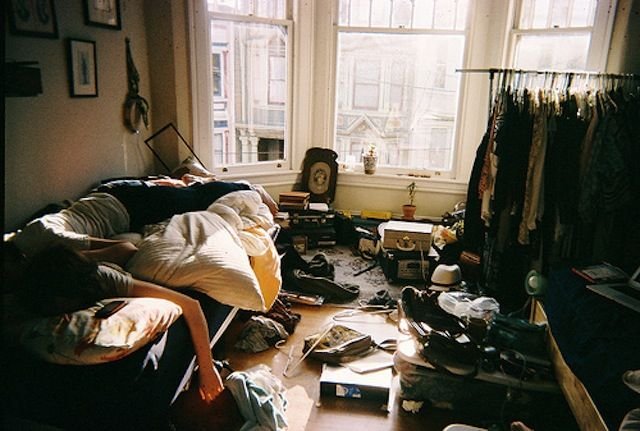
The Case Against Clutter (And For Sanity)
A 2011 study published in the Personality and Social Psychology Bulletin found that people who perceived their homes as cluttered had higher levels of cortisol, the stress hormone, (I promise, we’re not going into a looksmaxxing conversation, you’re safe here) and reported more fatigue and depression than those with tidier spaces.¹ Clutter, researchers found, literally stresses us out.
But it’s not just science, it’s a narrative, if we’re being dramatic, which we always are. We live in an age of more: more possessions, more screens, more notifications, more choices. Our closets become archives of past selves. Our countertops become holding areas for things that are “important but not urgent.” The result? A cumulative emotional tax on our nervous systems. Not to mention, the overwhelming wave of trendy ‘must-have’ pieces that are being shoved into our timelines, with a handy link right there, encouraging us to partake in fast fashion more often, because “it's only £5!!”. I’m sure many of us, myself included, are looking at our closets, wondering why we have so many pieces that we hardly use, and trying to sell on Vinted or Depop, but unfortunately, that trend has passed, and so there isn't much luck there. Simple remedy to the problem… buy smart, or let go.
Even The New York Times has weighed in, with features like “The Life-Changing Magic of Tidying Up” becoming cultural touchstones, but often misinterpreted. Tidying isn’t about shrine-like home perfection. It’s about making space for life to flow.
Letting Go: It’s Not Minimalism, It’s Permission
Stay with me, we here at PLATFRMD require a simple glance over our curated aesthetic, and we’re certain everyone would say it is decidedly not minimalistic, but this isn’t the type of minimalism that we’re discussing here. Many people hear the word minimalism and imagine all greys or neutrals, an absence of art, or arguably, ‘sad’ art. But even that image misses the point. Letting go isn’t about absence; it’s about intentional presence.
In her 2014 bestseller The Life-Changing Magic of Tidying Up, Japanese organising consultant Marie Kondo invites us to ask two questions about every item we own:
Does it bring me joy? And if it does not, am I keeping it out of guilt, obligation, or fear?
This isn’t just housecleaning. It’s a moral inventory. The act of releasing doesn’t diminish meaning; it clarifies what matters.
Sometimes, we hold onto things because the sheer fact that we have things feels safer. When I was younger, I used to see people with drawers of makeup and rows of clothes, which became my primary ambition. When I started to make money, I started to fulfil that ambition. I bought and bought, eventually I ran out of space, some of the makeup expired before I could properly use it, and the clothes didn’t feel ‘me’. Sometimes, we take pride in the fact that we can have nice things, and don't realise how it occupies our space externally and internally.
We hold onto things for emotional reasons: fear of scarcity, guilt over wasted purchases, optimism bias about future selves. And letting go becomes an act of self-care, not self-denial.
Feng Shui: The Flow of Life in Your Living Room
If the psychological value of space wasn’t enough, we can take it one step further into feng shui, a set of ancient principles originating in China over 3,000 years ago, designed to harmonise people with their environment.
The words feng shui literally mean “wind” and “water”, a poetic reminder that life itself is movement, flow, and balance.
Feng shui teaches that energy, called qi (pronounced “chee”), moves through our spaces just as it moves through our bodies. Clutter blocks that energy. Congested spaces create stagnant qi. Clear spaces invite smooth flow.
In practical terms, feng shui isn’t about mystical fairy dust. It’s about how arrangement shapes experience:
The front door is the mouth of qi, where energy enters your life. Blocked hallways or piles by the entrance? That’s like putting tape over your own air supply.
Beds with the head against a solid wall invite rest; beds under slanted ceilings invite unease.
Mirrors facing the bed can fragment energy; plants near the doorway invite life.
There are entire libraries of feng shui books dedicated to wealth, relationships, health, and career qi, but the core principle is deceptively simple:
When your space flows, your life flows.
Breaks in energy show up as irritability, indecision, and a sense of being “stuck” - psychological states that mirror emotional clutter.
Decluttering as Ritual - Not Chore
In her memoir The Year of Less, British author Cait Flanders writes about the “freeing cruelty of letting go.” She didn’t just get rid of things; she reclaimed time, clarity, and psychological space.²
That’s the power of ritual:
Even if you don’t believe in qi or spiritual energy, the act of choosing what stays and what goes is a declaration about what you value.
It’s similar to mindfulness practices:
You pause.
You observe (your possessions, your impulses, your attachments).
You make choices in alignment with intention.
And because it’s ritualistic rather than cosmetic, it carries meaning far beyond clean shelves.
Cultural Wisdom: East Meets West
Across cultures, the idea of letting go is deeply ancestral - not just trendy.
In Buddhism, attachment (to possessions, outcomes, identities) is the source of suffering. The Buddha taught that liberation comes not from gaining more, but from relinquishing the desire for more.³
Japanese culture, not just through feng shui, but through practices like wabi-sabi, embraces imperfection, transience, and simplicity. Wabi-sabi finds beauty in the worn and aged: a cracked bowl becomes more precious for its history, not less.
In Western psychology, the rise of the “decluttering conversation” speaks to deeper needs:
To counter overwhelm, to build autonomy, to foster meaning. Journalists and designers have written extensively about how physical environments shape mental states. From The Atlantic to Vogue, the same idea keeps cropping up: Your surroundings are a reflection of your internal world.
Why We Don’t Really Let Go
Let’s be candid:
Clutter is not the problem; it’s really more to do with fear,
Fear of:
running out (scarcity mindset),
forgetting (memory-storage thinking),
regret (what if I need this someday?),
judgment (others will think I wasted money).
If objects are attachments, then letting go feels like loss. But thoughtful release is not a loss, it’s a reframing. You are trading volume for value.
Emotional attachment to objects often mirrors wider patterns:
Are you holding onto past versions of yourself?
Are you avoiding closure?
Are you afraid of change?
Space As Narrative
One of the most powerful ideas in interior design is that your space tells a story. But clutter tells many stories all at once: unfinished projects, unresolved commitments, gifts you didn’t ask for but felt obligated to keep.
In contrast, a thoughtful space reflects your current values, and Feng Shui amplifies this idea, stating that the energy in your home directly corresponds to the energy in your life. If the kitchen is chaotic, relationships feel stressed. If the bedroom is cluttered, sleep suffers. If your workspace is disorganised, ideas stagnate.
From a psychological standpoint, this aligns with research on environmental cues and behaviour: tidy environments promote focus; cluttered ones promote distraction.
In other words, our spaces don’t just look messy, they behave messily.
The Real Benefit Isn’t a Clean House, It’s a Freed Life
(dramatic again)
Here’s the twist: once you declutter, the true transformation isn’t aesthetic. It’s cognitive, emotional, and spiritual.
People who commit to letting go often report:
Fewer daily decisions (less decision fatigue),
Deeper gratitude,
Stronger clarity about goals,
Better rest and focus,
More meaningful consumption patterns.
You begin to buy and live differently. Your Home becomes a sanctuary, not a storage locker.
This is the opposite of consumer culture. You stop chasing more and start discerning better. In practice, the ripple effects reach beyond your closet: Letting go in your home helps you let go of emotional baggage, old relationships, outdated self-images, and limiting beliefs.
A Simple Process for Starting Today
If you want to begin (no mysticism required), here’s a PLATFRMD approved roadmap:
Pick a Zone: Don’t overwhelm yourself; start with just a drawer.
Ask Two Questions:
Do I use this?
Does this bring me joy or value?
Sort Into Three Bins:
Keep
Donate/Sell
Trash/Recycle
Set a Timer: 20 minutes maximum.
Celebrate Small Wins.
Letting go doesn’t mean losing. It means choosing. It means simplifying your external world so your internal world can breathe.
And in a world that constantly demands attention, ownership, and accumulation, the radical act is not buying more; it’s reclaiming what you already have. Clear your house, clear your mind.
References & Inspirations
Personality and Social Psychology Bulletin - Studies linking clutter and stress.
Cait Flanders -The Year of Less.
Buddhist philosophy on attachment and suffering.
Marie Kondo - The Life-Changing Magic of Tidying Up.
Various cultural essays from The New York Times, The Atlantic, and Vogue on minimalism and life redesign.