
The Ghost on the Moors: Why the 2026 Wuthering Heights Film Was So Controversial
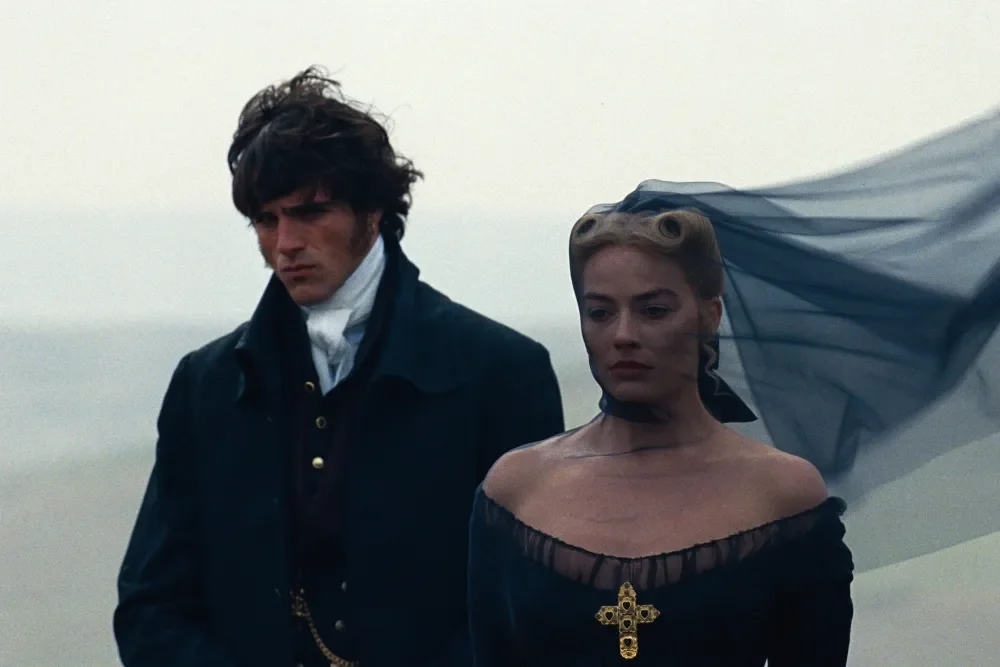
And why did casting Jacob Elordi as Heathcliff spark such a cultural reckoning??
When a gothic classic as revered and as unsettling as Wuthering Heights gets reimagined on the big screen, some controversy is nearly inevitable. But the 2026 adaptation, directed by Saltburn’s Emerald Fennell and starring Margot Robbie and Jacob Elordi, ignited debates not just about fidelity to text, but about race, literary legacy, and what it means to translate deep psychological and social wounds from page to celluloid.
On its surface, the uproar was about casting: Jacob Elordi, an actor best known for his good looks, as ‘white boy of the month’ or from popular rom-coms, such as ‘The Kissing Booth’, plays Heathcliff, a character whom many readers believed Brontë wrote as racially ambiguous or explicitly “dark-skinned” and therefore non-white. Yet beneath that surface lies something richer: an argument about the soul of Brontë’s story, the ethics of adaptation, and the cultural weight we place on representation in classic literature.
The film’s visuals are undeniably impressive. Cinematographer work captures the Yorkshire moors with a brooding grandeur that feels like a painterly midwinter dream; there are sequences of bleak winds and stormclouds so beautifully shot they feel like existential tableaux. Yet as beautiful as the imagery is, the bleakness of Brontë’s elemental world translated in widescreen composition, there is a persistent sense that what the film looks like has become more important than what it is.
If the controversy revolved only around Elordi’s casting, the conversation would be interesting but narrow. Instead, it has become a flashpoint around literary authenticity and cultural reappropriation: what it means to adapt a beloved book, and whether a modern director owes fidelity to every nuance of Brontë’s original characters. The most heated debate has centred on Heathcliff’s race, or, more precisely, how his race has been interpreted over nearly two centuries of reading and adaptation.
In Emily Brontë’s 1847 novel, Heathcliff is described early on as a “dark-skinned gypsy in aspect” with “black eyes,” and characters speculate about his origins, ranging from Indian or Chinese parentage to other ambiguous backgrounds. This ambiguity has historically been read in multiple ways: as an indicator of outsider status, class marginalisation, or even racial otherness at a time when Britain’s global entanglements were already reshaping conceptions of identity.
For a modern audience, especially one attuned to erased or sidelined representations in media, that description has felt like more than a passing detail. It provides a social texture to Heathcliff’s experience: he is not only an orphan thrust into claustrophobic moorland society but someone whose difference becomes part of the violence inflicted upon him. White actors have often played Heathcliff, from Laurence Olivier in 1939 to Ralph Fiennes in 1992 to various television portrayals, but Andrea Arnold’s 2011 adaptation cast James Howson, a Black British actor, specifically to lean into the character’s otherness in a way earlier versions had not.
Enter Jacob Elordi: charismatic, lithe, and well-fashioned, but, in the eyes of critics, stylistically misaligned with Brontë’s textual cues. Outrage erupted when fans, critics, and scholars alike pointed out that the choice risked “whitewashing” the character’s essence and erasing potential readings of Heathcliff as a character shaped by race as well as class. “Heathcliff is described as a dark-skinned brown man in the book, and a major plot point is that he was subjected to racist abuse by his adopted family,” one critic wrote on social media around the trailer’s release.
Fennell and the film’s defenders push back: Heathcliff’s precise ethnicity was left deliberately ambiguous by Brontë, they argue, and colour-blind casting can open narratives to broader interpretation. Fennell herself reportedly said that Elordi’s look reminded her of an early illustration of Heathcliff and that emotional resonance, rather than strict ethnographic fidelity, guided her choice.
This debate is not merely about skin tone versus hair colour; it’s about how literature and film negotiate identity in cultural memory. To many, Heathcliff’s grimness, his social ostracism, and his existential rage aren’t separable from his position as an outsider in a rigidly stratified social world. To cast him purely as a conventionally attractive white Australian star shifts the cultural and political implications. It recalibrates the text’s commentary on othering, transforming an abrasive outsider into a brooding, if stylish, romantic lead.
In a broader cultural moment when representation matters more than ever, and when audiences are rightfully critical of who gets to embody whom on screen, the film’s handling of Heathcliff’s identity feels less like a neutral artistic choice and more like a missed opportunity to engage with the novel’s embedded complexities. This isn’t simply social-justice activism; it’s a question about what is lost when a story’s subtextual tensions are flattened for aesthetic cohesion.
Even beyond casting, the film’s tone has been divisive. Critics have described Fennell’s take as “provocative” and even “silly”, a kind of eroticised reimagining that emphasises mood and surface tension over the deeper emotional and social undercurrents of Brontë’s work. One early review characterised the adaptation as “over-the-top reimagining” that, while visually striking, turns the source material into “silly, uncomfortable… rage bait.”
Indeed, Wuthering Heights, the novel, does not comfortably settle into tidy genre boxes. It is a gothic chaos of violence, obsession, class resentment, psychological bricolage, and narrative unreliability. Brontë’s structure, stories nested within stories, filtered through unreliable narrators, refuses easy emotional categorisation, making the novel itself a kind of interpretive riddle. To frame the story as if it were primarily a “romantic tragedy” risks domestication of its essential wildness, because the book’s true heart is more sinister than sentimental.
This tension between adaptation and reinterpretation is as old as film itself. Every generation reshapes Wuthering Heights to reflect its own anxieties: passion, desire, class conflict, racial otherness, and generational trauma. But the 2026 film’s lean into eroticism, aesthetic polish, and mainstream romance tropes has made some fans feel as though they are consuming fan fiction set on the moors, where original nuance gets lost in seductive visual language. And while there is room for playful adaptation, the line between homage and re-imagination is thin — especially when the emotional and sociopolitical scaffolding of the source material plays such a profound role in readers’ connection to it.
Charlotte Brontë, Emily’s sister and a literary heavyweight in her own right, once observed that Wuthering Heights was “chaos and crag”, a landscape raw with elemental forces, untidy passions, and moral ambiguity. Emily Brontë wrote only one novel, and it staked its claim on being not a comfortable romance but a dark study of love as ruin as much as reverence.
Heathcliff’s significance, especially in the literature of that era, cannot be overstated. In the Victorian imagination, race and class were deeply entangled with notions of social worth, spiritual destiny, and bodily presence. That a central character could be racially ambiguous, subject to contempt, and yet occupy the narrative centre was radical. Even if Brontë did not expressly define Heathcliff’s ethnicity in modern terms, her choice to make his origins mysterious added a social dimension to his suffering and his vengeance. Many have interpreted that ambiguity as a critique of rigid class hierarchies intertwined with racial prejudice.
In this sense, Heathcliff is not just a brooding lover; he embodies social exclusion. His penetrating gaze, his violence, his obsessive attachment to Cathy, these are symptoms of a world that refuses to accommodate him. The character’s darkness is not merely cosmetic but structural. It challenges readers to consider how difference is perceived and punished. To soften that by aestheticising him as a conventionally handsome white lead risks decoupling the character’s emotional force from its original cultural shock.
Yet the controversy also reflects our current moment. In an era where Hollywood frequently reimagines classics with pop music soundtracks, hyperbolic sexual imagery, and star-driven casting that privileges celebrity over typological fidelity, the 2026 Wuthering Heights adaptation stands as a case study in the tension between artistic reinterpretation and audience expectation. Some viewers praise the film as a bold aesthetic achievement, an emotionally charged cinematic experience; others see it as an aesthetically beautiful but thematically hollow version of the novel.
And that judgment may depend less on the intrinsic quality of the film itself than on how we think stories ought to function. Are adaptations sacred translations, beholden to every nuance? Or are they cultural dialogues, reimagining classics for new audiences, and therefore entitled to creative departure? Fennell clearly sees Wuthering Heights less as a historical text and more as a spiritual ancestor: something to be felt rather than slavishly reproduced. But that choice can feel disorienting to readers who cherished Brontë’s insistence on ugliness as much as beauty.
In the end, the 2026 Wuthering Heights will be remembered as both a cinematic spectacle and a cultural trigger. It reminds us that when classics are reinterpreted, audiences do not merely watch a story unfold; they rediscover the politics bound up in its pages. What Heathcliff means to us says as much about our own preoccupations with race, class, and representation as it does about Brontë’s mid-19th-century novel.
The moors may be wild, but the real storm is here on the ground: a collective reexamination of what it means to carry forward the stories that shaped us.
References
ABC News Australia. “Explain the Internet: Why Wuthering Heights is one of the year’s most controversial adaptations.” (2026)
Brontë, Emily. Wuthering Heights. 1847.
Forbes. “Wuthering Heights Film Adaptation Controversy, Explained.” (2025)
Geek Vibes Nation. “Wuthering Heights Review, Emerald Fennell’s Silly, Uncomfortable Bodice-Ripping Rage Bait.” (2026)
Reddit — r/PeriodDramas and r/brontesisters discussions on casting, adaptation, and interpretation. (2025–2026)
SCMP. “Meet Emerald Fennell: Wuthering Heights Director Whose Bold Take on the Novel is Drawing Controversy.” (2026)