
Linda Merad - The new Hermès Illustrator and why she matters
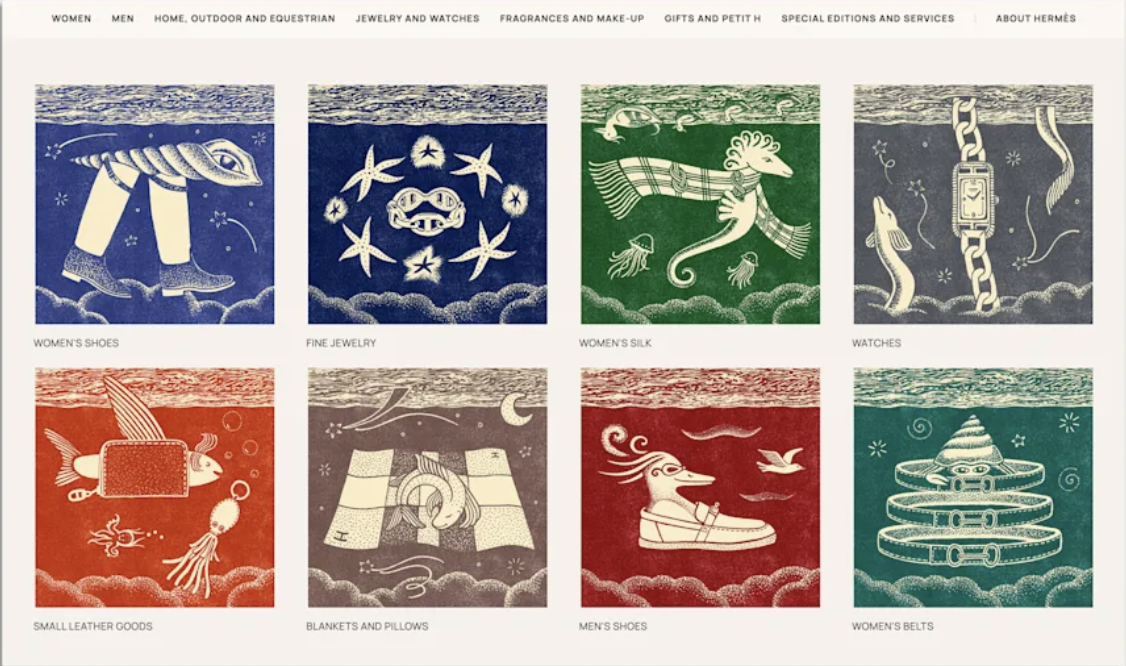
Recently, Hermes decided to hire an illustrator to design on their website, rather than opting for the usual response from a majority of brands, which is, as of late, the AI route, now if you’re here for a discussion over the ethic of AI, then this may not be the issue to read as we do have another issue entitled, “AI is killing our planet and our ability to think - let's talk about it”, which might be more up your valley. Today, instead, we will be discussing what this decision means for Hermes, which is already seeing a surge in positive feedback for supporting an independent artist, what this means for the fashion industry and what this means to us.
The French house consciously chose a human artist to shape its digital presence. The reason this spoke to people is that it isn’t a business move driven purely by tech trends or UX metrics. It’s a declaration in a world saturated with soulless automation; they're decisively showing us that human imagination still matters.
For years, major luxury houses have chased the perfect image, a flawless digital aesthetic that appears sleek and seamless across screens and speaks to people of what their brand is, its meaning and its exclusivity. But perfection isn’t always the same as meaning. In 2026, Hermès turned that assumption on its head by commissioning Linda Merad, a Paris-based illustrator, to craft the visuals that greet visitors as they enter the brand’s online world.
What makes this so striking isn’t merely the fact that an artist was involved. It’s that Hermès entrusted the essence of its digital identity to someone whose creative sensibility thrives on gesture, texture and the visible trace of a human hand.
This choice feels intentional at a moment when artificial intelligence is shaping creative production across industries. AI can mimic style and generate images quickly, but it can’t replicate the human passion and touch for art.
Who is Linda Merad?
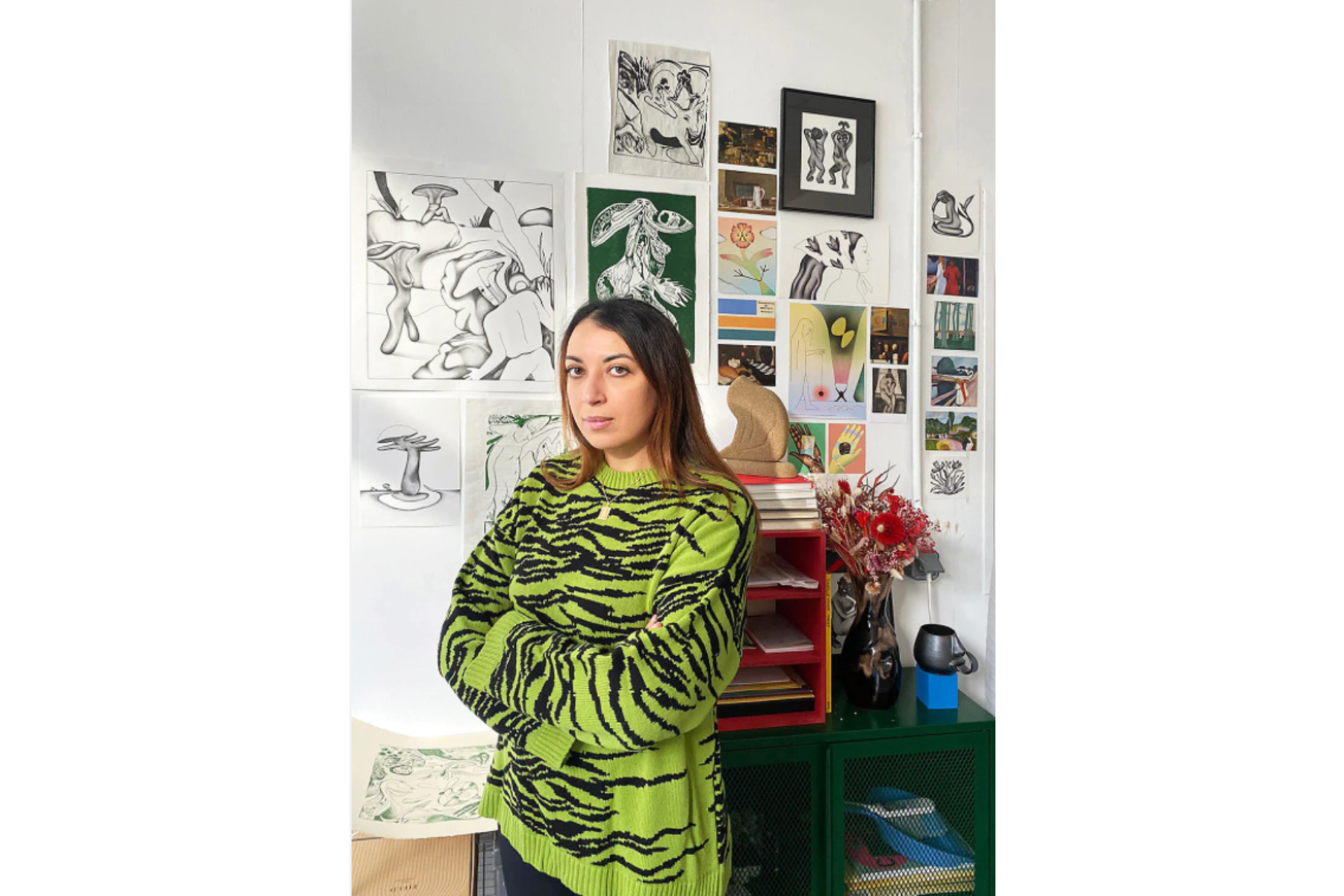
To understand the intention behind the choice of Linda Merad as the creative designer for their website, let's first take a deeper look at her and her art.
Linda Merad is a Paris-based graphic designer and illustrator whose work is quietly distinctive, rooted in hand-drawn lines that feel alive. She began with a graphic design degree in 2014 and started her career immersed in design work, but over time, her drawings took precedence. She discovered that her ideas originated most directly from the pencil itself rather than from vectors or shortcuts.
In interviews, she describes herself as someone driven by curiosity and visual exploration, a compulsive collector of images and ideas from fashion, social trends, photography, and everyday life. What distinguishes her approach is that she layers these inputs through her own sense of narrative. Her illustrations often possess a dreamlike quality, not overly polished, not slick for the sake of slickness, but evocative and personal.
Merad’s process often begins with a preparatory pencil sketch, not a rapid output, but a slow, intentional build-up of ideas to form. Only after she establishes narrative and composition does she move into digital tools like Photoshop, infusing subtle atmospherics without erasing the original hand-drawn spirit that gives her work so much of its emotional charge.
Her trajectory, from a design student who once dreamt of fashion but found her true voice in line and composition, to an artist whose illustrations have appeared in The New York Times and The Atlantic, is a testament to the enduring relevance of traditional artistic training even amid digital transformation.
In recent years, Merad has worked on a range of editorial and commercial projects, and she was drawn into Hermès’ orbit after creating pieces that spoke to the house’s creative team. What started as illustrations of Hermès products evolved organically into a broader invitation to shape the visual identity of a core brand platform, something that, in Merad’s own words, surprised her. She didn’t expect the collaboration to become the centrepiece of the brand’s digital presence.
She said at the time that Hermès wanted viewers to feel that a human being had made the art, to feel the materiality of the drawing. It was a deliberate artistic direction from the brand, not a concession or a trend, an acknowledgement that hand-made imagery carries something inherently human.
Hermès and the Reaffirmation of Craft
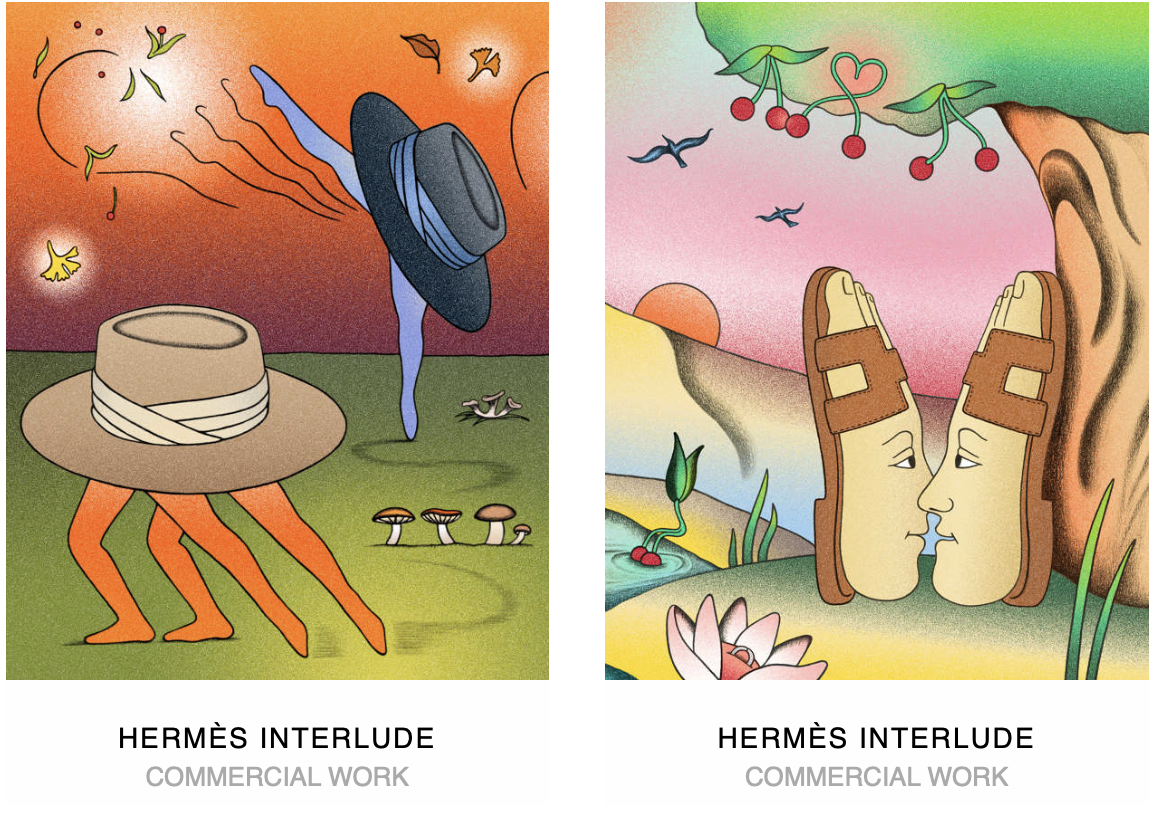
Hermès’ partnership with Merad matters because it signals a deeper cultural positioning. This is a company that built its legacy on craft, painstaking artisanal skill, and slow mastery. Its iconic Birkin or Kelly bags, for example, are not mass-produced by machines but hand-stitched by highly trained artisans over many hours and sometimes even days. That commitment to craft, transmitted through generations of makers, is central to the brand’s identity. Bringing that philosophy into the digital world means craft isn’t a purely physical concept.
By commissioning an illustrator like Merad for its online space, Hermès effectively declared that authorship matters in digital experiences, not just aesthetic mimicry. In a world where AI-generated visuals can flood feeds with derivative imagery, Hermès chose texture and personal interpretation over algorithmic synthesis.
The significance of that choice isn’t limited to Hermès itself. Luxury leaders often serve as cultural bellwethers. When one of the world's most established and revered houses gives primacy to a human creator in an online context, other brands take note. Designers, creative directors, art directors, they all watch these moves and recalibrate what they consider acceptable or aspirational, not to mention the public's reaction and approval of this, which will instinctively make other brands follow their lead.
The traditional fashion calendar is built around relationships: from designers to ateliers, and primarily from supplier to consumer. What Hermès’ choice does is extend that relational economy into the digital ecosystem. It suggests that the networks of human creativity we value offline can and should have equivalents online, that creativity shouldn’t disappear behind a curtain of polished pixels generated by artificial processes.
What This Means for the Fashion Industry
So what does Hermès’ decision mean for the broader fashion world? First, it underscores that experience now counts as much as product. A website is not just an online catalogue. It is a space where brand identity meets lived human interaction. By inviting Merad to help shape that space, Hermès acknowledged something fashion leaders have subtly resisted for years: that digital environments deserve the same care as collections presented on a runway or boutique façade.
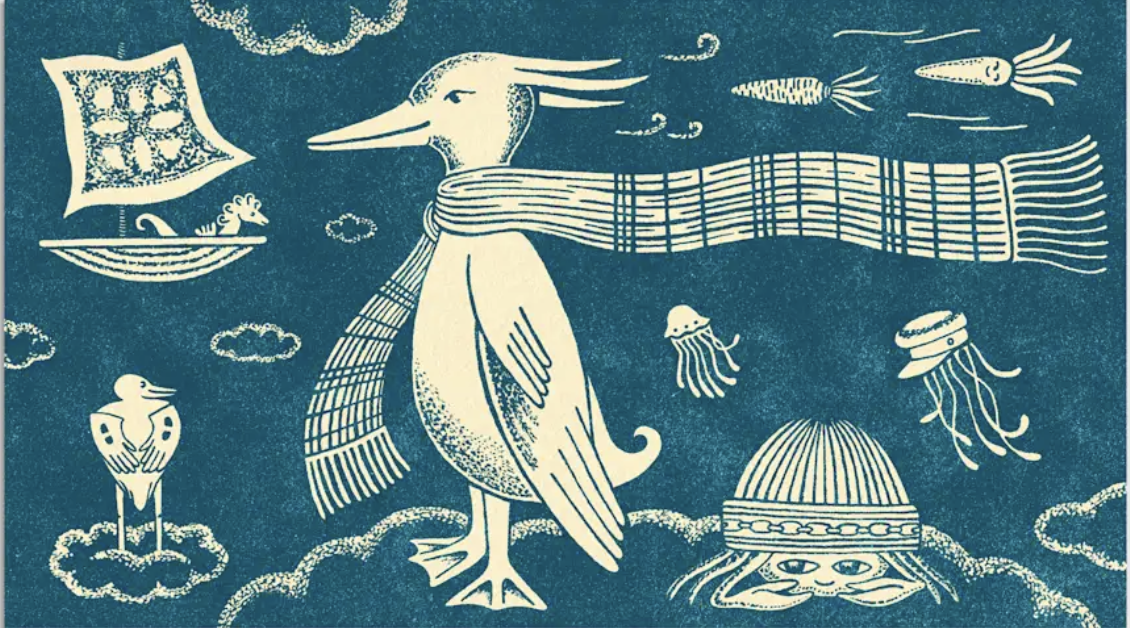
This choice also pushes against a creeping trend toward visual homogenisation. When digital campaigns lean too heavily on stock imagery or AI templates, they risk becoming indistinguishable from one another. The result is a kind of global monotony that undermines the idea of a distinctive brand identity. Hermès’ hand-drawn visuals disrupt this pattern. They feel personal and tactile and stray just enough from perfection that you can feel a human presence guiding them.
There’s also meaning in the fact that Hermès didn’t just commission work and stamp it on a page. The integration of Merad’s illustrations into Hermès’ website suggests that art was woven into their narrative and their navigation. Visuals don’t just sit alongside products; they interact with them and create a space that feels more like a story unfolding than purely an economic transaction on a website, which so perfectly adds a level of ‘whimsy’ to their purchasing process.
In doing so, Hermès points toward a future where digital craftsmanship becomes a benchmark of creative excellence. Brands no longer need to choose between technological sleekness and human warmth. They can synthesise both, while still privileging voice, vision, and originality, qualities that machines cannot authentically replicate.
What This Means to Us And Why It Matters to Artists Everywhere
This feels like a watershed moment for creatives because it affirms something intuitive yet often undervalued: human nuance still resonates. In a world where patterns can be analysed and reproduced in milliseconds, personal perspective is what remains irreducible.
It means that being an artist is not an outdated profession in a digital age, and it means that real experiences and expressive choices carry emotional weight in ways automation cannot fully capture. That taste for craft isn’t just nostalgic but a testament to the power of authenticity in shaping how we experience the world.
Merad’s collaboration with Hermès also signals that large institutions can, and should, invest meaningfully in independent creatives. It validates the idea that artists don’t need to be subsumed by studio systems or design conglomerates to participate in major cultural conversations. Independent voices can set the tone for how audiences engage with brands, stories, and ideas.
For young artists wondering where they fit in an increasingly digitised creative economy, Hermès’ choice illustrates that there is space for human difference. There is space for vision that can’t be templated. And there is room for artists to be compensated, credited, and celebrated not as add-ons but as central voices in shaping cultural expression.
Beyond brand strategy, this is about cultural values. When we invest in human creativity, we reinforce the idea that art and design are not luxuries; they are essential components of how we understand and interpret experience. They give shape to what we feel and remember and hold weight to what matters most, not the speed of creation, but the depth of connection.
References
Hermès launches a different kind of website - and it’s beautiful - Domus (2026).
Hermès Venture Beyond: Human Craft vs AI Gloss - Luster Magazine (2026).
Linda Merad combines texture and composition to create dreamlike illustrations - It’s Nice That (2020).
Hermès and the rise of hand-drawn luxury - Creative Moment (2026).
Hermès’ hand-illustrated website is the ultimate luxury - RSSing summary (2026)