
Dior is so back - How J.W. Anderson Might Just Be Dior’s Rescue Story
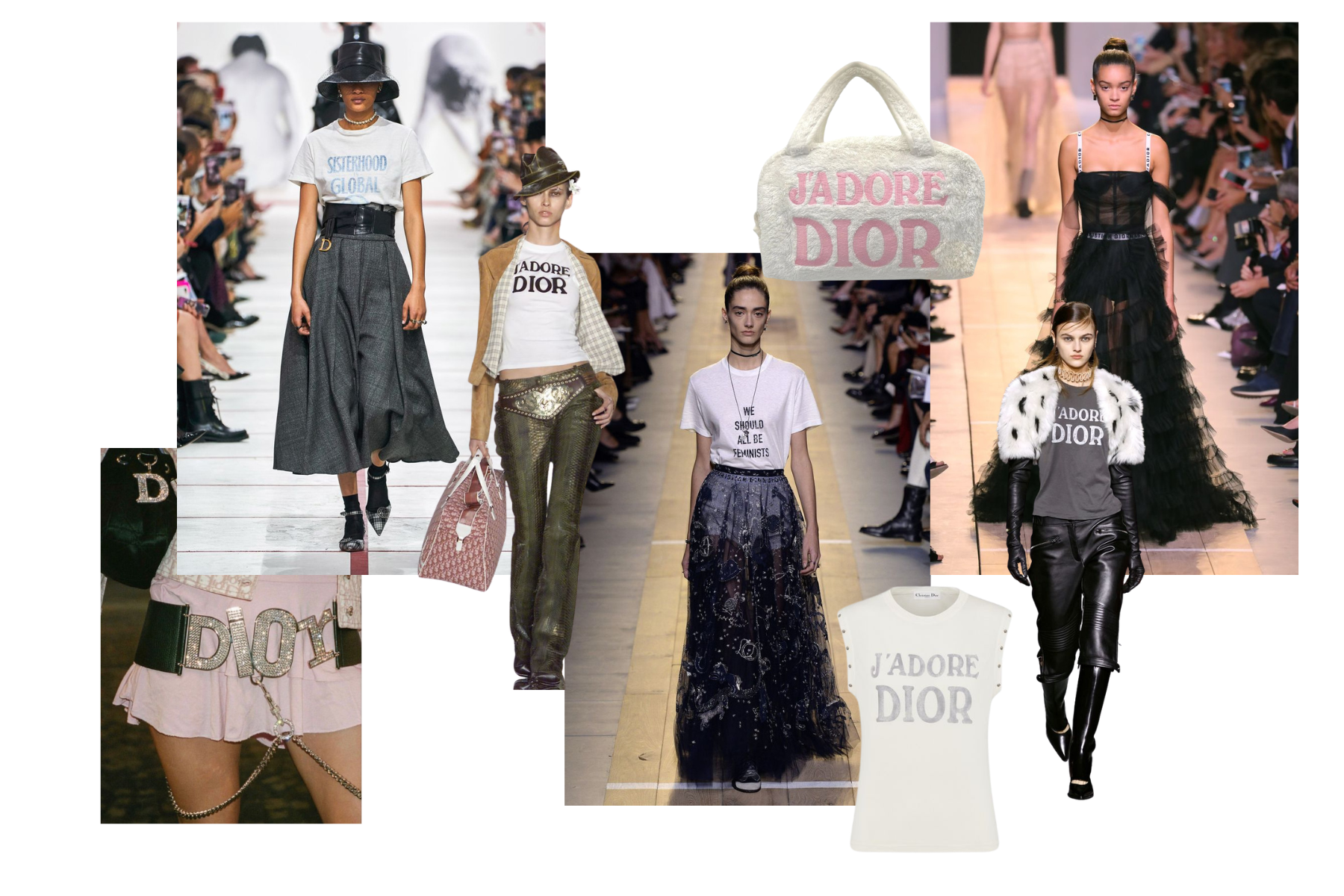
There’s a certain irony in saying that Dior, the French house whose 1947 New Look literally revived couture after wartime austerity, needed rescuing. Dior, with its hourglass silhouettes and obsession with luxurious fabrics, was once the antidote to the drabness of wartime dressing. Fast forward to the early 2020s, and that story of refined, aspirational femininity somehow got lost between feminist tees and streetwear collaborations. We’re not saying there is anything wrong with feminist tees and streetwear, but it is inauthentic to Dior and it felt like a way for them to stay relevant to all consumers, rather than a curated exclusive niche, which is everything Christian Dior should be, and has been since its origin. Maria Grazia Chiuri’s tenure had its high points, feminist slogans paired with midi skirts that looked effortless yet powerful, but by 2025, a kind of stylistic sameness had set in. When she stepped down, there was a sense not of crisis, but of stagnation, Dior was still earning money and still beloved, but the critical buzz felt thinner than its legacy deserved.
Enter Jonathan “J.W.” Anderson, a designer who was famously at the helm of his own eponymous label and then at Loewe, where his intellectual playfulness and emphasis on craft gave the Spanish house a kind of cool that felt both avant-garde and heirloom quality. Anderson didn’t arrive at Dior with a manifesto like “we’re bringing back glamour” on a splashy billboard. No, his approach has been more like a curator with a sense of humour, the sort who knows the value of a Bar jacket, but also sees the poetry in slipping a lampshade silhouette beside it.
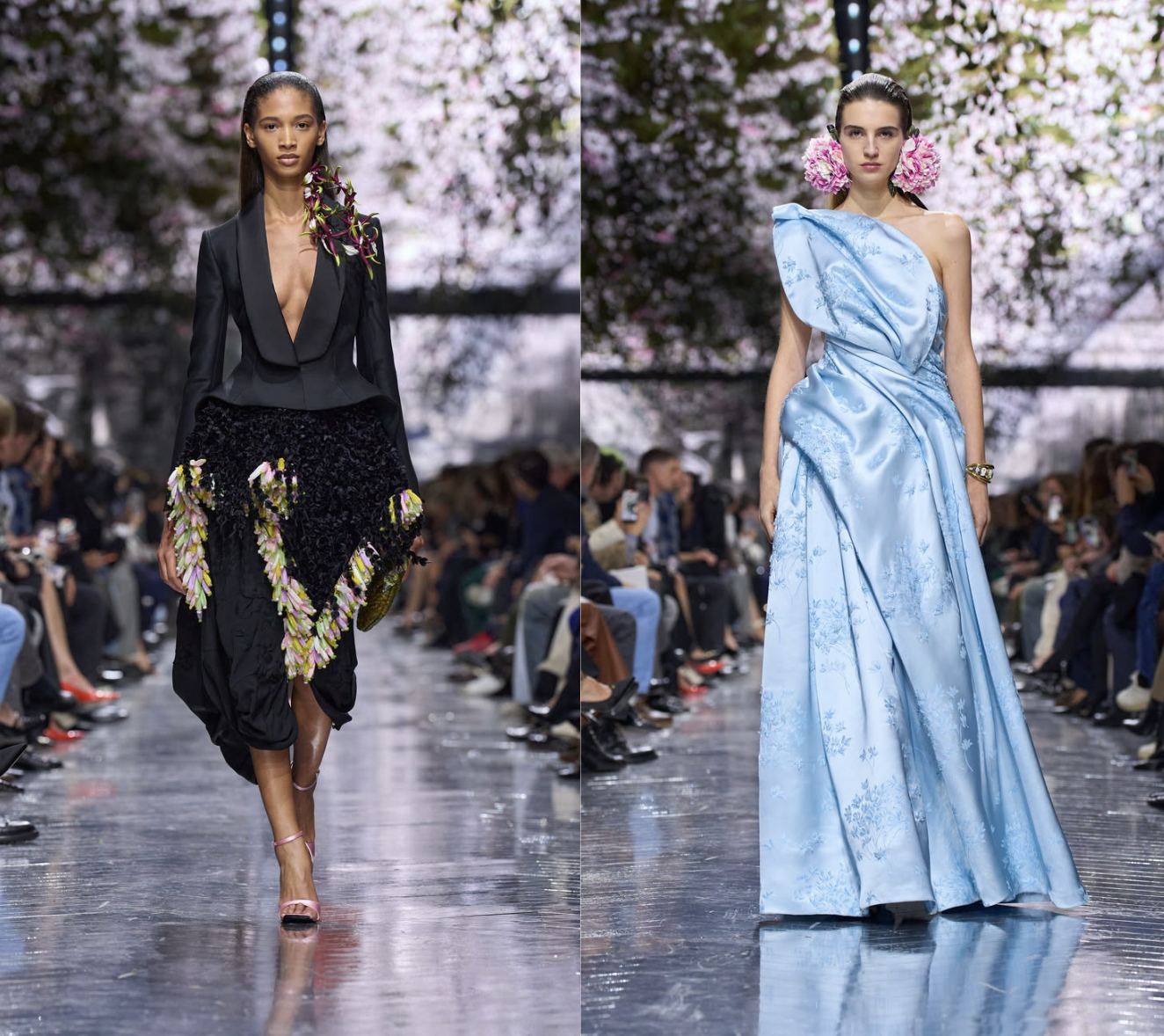
At the Paris Fashion Week Spring/Summer 2026 runway, Anderson’s first official womenswear collection for Dior debuted under the weight of enormous expectation. And sure, critics didn’t unanimously hail it as the next New Look moment, some argued it felt “fragmentary”, a mix of ideas rather than one unified vision. But looking closer, at craft, at detail, at what fashion does when it isn’t pandering to streetwear hype, what emerges is something more resilient than any viral trend.
The standout moment wasn’t a TikTok-friendly slam dunk. It was craftsmanship, woven through and through. Anderson re-contextualised Dior’s core signatures, the Bar jacket, the sense of fantasy, the celebration of silhouette, but without nostalgia that feels plastered on. Instead, he leaned into le flou, that beautiful French idea of soft tailoring and fluidity, letting fabric breathe and shapes bloom through this breathability. Dresses unfurled like petals, skirts billowed, and jackets were more of a whisper at the waist instead of corseted and sharp, an homage to the original Dior silhouette but in a modern and adapted way, and still maintained the femininity and gracefulness that Dior has always been known for.
That’s a big deal, especially to those of us who are so involved in how quickly every brand is merging into one particular niche or aesthetic in order to maintain their virality. Fast fashion lives in the now, quick and cheap, designed for immediacy. Street style lives in the trend cycle, where virality trumps longevity. But what Anderson is quietly proving is that thoughtful design can still be relevant without being derivative. His Dior isn’t chasing the hottest silhouette on Instagram or leaning into every microtrend. It’s looking inward, towards craft, towards heritage, towards what fashion feels like for Dior rather than what it looks like right this second.
At the runway, there were echoes of Christian Dior’s original thesis: elevate the everyday and make it feel extraordinary. But Anderson added a twist. He didn’t just resurrect the Bar jacket, he reshaped it: cropped, twisted, bearing ribbons and loops that felt simultaneously fresh and familiar. There were oversized bows and draped lampshade silhouettes that flirted with fantasy without sliding into costume. These weren’t Instagram bait; they were objects of desire, clothes you might live in, study, think about.
This might be why some of the angrier corners of online fashion discourse felt conflicted. There were threads dismissing certain pieces as “too bottom-heavy” or “mumsy drapery.” Others argued that Anderson’s ready-to-wear wasn’t as cohesive as it could be. But here’s the crucial point: conflict doesn’t mean failure. Personally, us here at Platfrmd felt it was a return to whimsical fun on the runway and we thoroughly enjoyed watching this show, felt like starting of the new year right for the S/S 2026 collection, each piece so carefully curated and beautiful, felt like fairy-core meets elegant luxury, which is perfect to us, no bias, of course. In a world where fashion, especially at the luxury level, too often looks like either painfully ironic streetwear or rehashes of past glories, something that provokes discussion is noteworthy in itself.
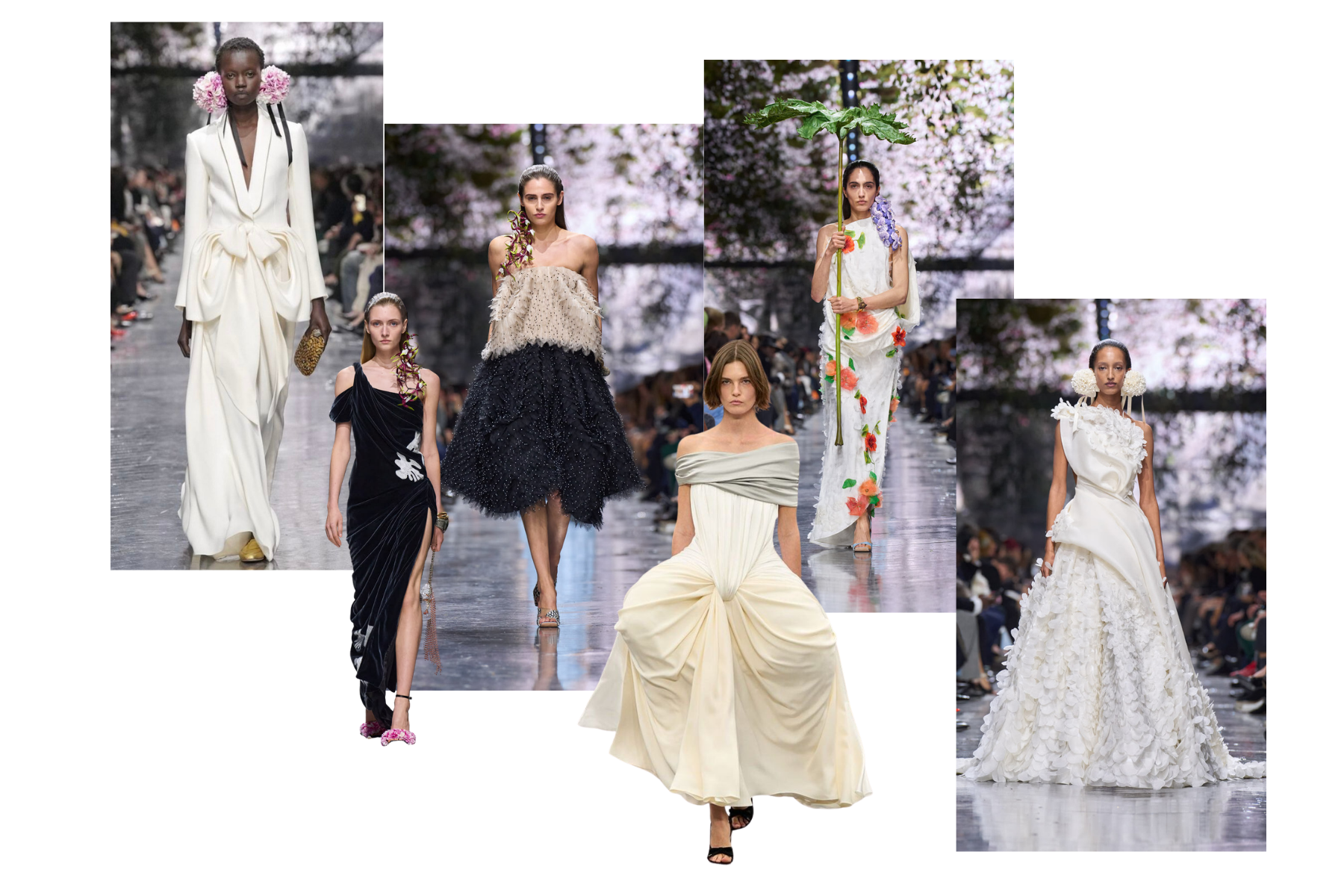
Anderson isn’t giving us a single “house voice” the way Dior’s original founder did. He’s giving us multiple voices within a chorus, delicate florals next to sculptural tailoring, subtle modernism next to overt ties to heritage. That multiplicity feels more in tune with how people actually dress now: not for a single monolithic ideal, but for hybrid identities. In a world awash with fast fashion’s disposable novelty, Dior under Anderson feels like a slow fashion moment masquerading as luxury, an approach so counterintuitive it almost feels radical.
Look at the accessories that came out of that runway. New iterations of the Lady Dior bag, sculptural heels with bows, and logoed pumps that feel like heirlooms before they’ve even hit store shelves. Accessories are the engine that funds couture and runway experimentation, and Anderson’s choices here weren’t safe. They were distinctive, anchored in craft and story, not algorithm-driven logos slapped on basics.
This is where I think the “saved Dior” narrative makes sense. Dior was a house founded on refined femininity, craftsmanship, and aspirational dressing, a posture that isn’t inherently flash or loud. Over the past decade, luxury at large flirted with streetwear and tech, chasing relevance like a toddler chasing bubbles. Even houses known for elegance began to look like brands trying to prove they’re cool. Anderson’s Dior feels like a reset, not a rejection of the modern world, but a refusal to let instant gratification define couture.
Anderson himself has talked about designing for purpose rather than immediate stimulus, bemoaning the fast fashion cycle where clothes are “designed to get stimulus right now and by the time they reach stores, they’ve lost their energy.” That’s not just a clever line, but a diagnosis of what’s wrong with fashion today and Dior under his watch looks like a prescription.
Seen this way, Dior isn’t being rescued from irrelevance. It’s being recalibrated and reminded that elegance doesn’t need to yell to be heard, that femininity isn’t a trend but a lineage, that garments can be thoughtful instead of transactional. Even if every critic doesn’t love every piece, the intent is unmistakable: find continuity with the house’s origins, and in doing so, offer something that can outlive the next TikTok moment.
Some will grumble that there isn’t one unifying silhouette, or that it feels half Dior, half J.W. Anderson, half something else entirely. But perhaps that’s the point. In 2026, fashion isn’t about one look dominating global taste. It’s about pluralism and a conversation between history and the female body. The house of Christian Dior, began as a conversation between postwar optimism and couture artistry. Under Anderson, that conversation hasn’t stopped, it’s just got richer, more layered and a lot more reflective of true honouring of women and their bodies, and how to work with a woman's body rather than make the body work for the piece, which is arguably, true femininity, adoring the body so much that we don’t fight to make it work to fit into something too small or unauthentic to who we are.
Maybe “saved Dior” is dramatic, and it may be too soon to call. But in a world drowning in fast fashion’s ephemeral flash, Dior’s renewed commitment to craft, heritage, and intelligent femininity feels like the kind of foundation worth saving. Wearability won’t make you a legend. Trends won’t buy you decades of relevance.
References (for further reading)
News & Reports
• Jonathan Anderson’s Dior debut at Paris Fashion Week offered a mix of ideas rather than a revolutionary silhouette, signalling a work in progress rather than a thrown-away brand moment.
• Jonathan Anderson collaborated on a reimagined Lady Dior bag, signalling craft and artistic integration beyond just clothes.
Search & Analysis
• Critics and commentators noted that Anderson’s first womenswear collection for Dior engaged deeply with heritage, offering harmonious tension rather than a singular “New Look.”
• Some online reactions questioned the collection’s identity, while also acknowledging that the era it represents is a test for Dior’s future.
• Anderson’s approach emphasised le flou — soft, fluid tailoring that blended tradition with contemporary gestures.
• Key elements of the 2026 Dior runway included reimagined classics like the Bar jacket, dramatic voluminous silhouettes, and accessories that balance theatricality with commerce.
• Anderson’s own reflections on design highlight the challenge of creating clothing with lasting purpose in a fast-moving industry.
• The accessories-driven strategy and reinterpretation of Dior’s logos and forms also factor into how Anderson is shaping the house.