
The panopticon: what it is, and how it can affect our society (or already does)
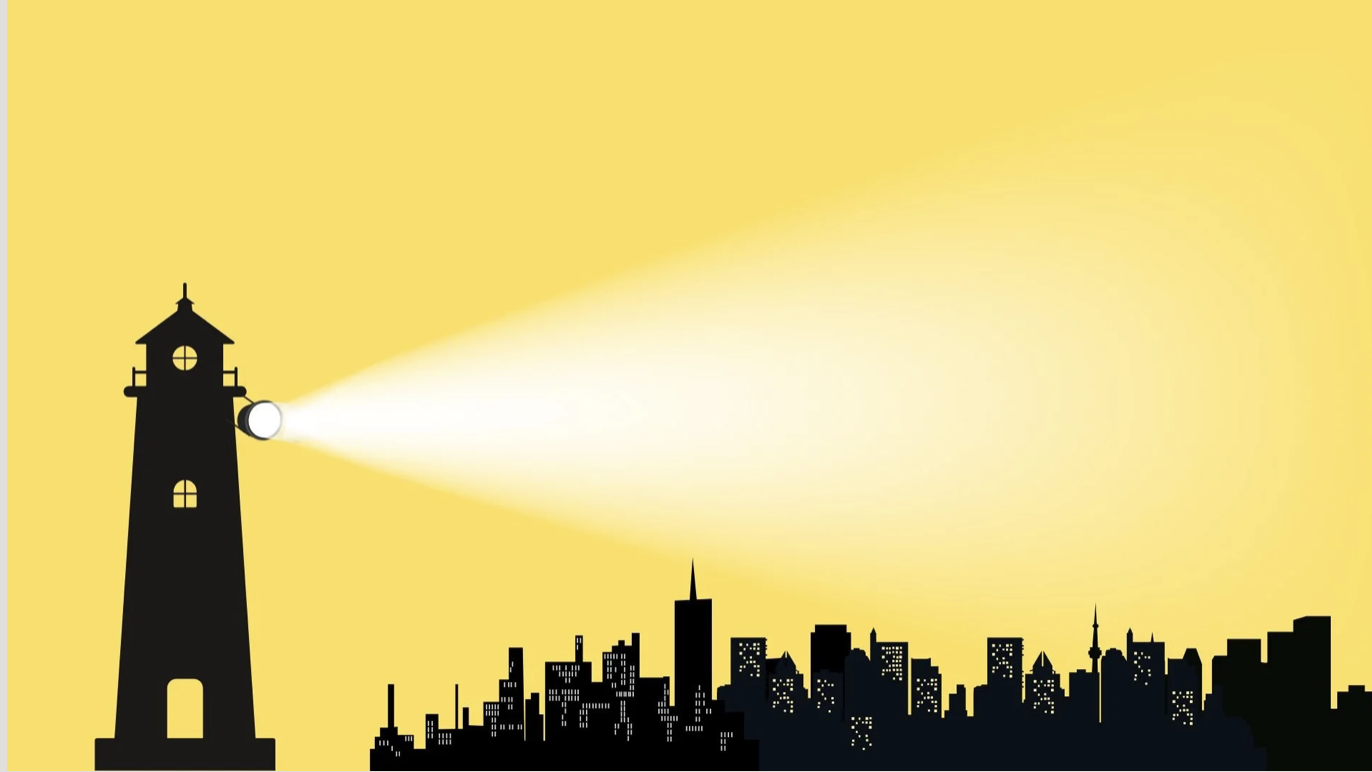
By the time we cross beneath the arches of our CCTV-lined streets, swipe phones that map our likes, or tacitly agree to terms and conditions we never read, the Panopticon is no longer confined to Jeremy Bentham’s dusty architectural blueprints. Once conceived as a revolutionary prison design, today it haunts the digital city, reverberating through literature, politics, and even our behavioural choices- even when no one’s clearly watching.
In 1785, British philosopher and reformer Jeremy Bentham sketched an ingenious blueprint: a circular building with cells arranged around a central tower where a single guard could observe every prisoner. The trick was not physical omniscience - the guard couldn’t literally see everything all the time - but uncertainty: inmates would never know when they were being watched. That uncertainty was itself the mechanism of control, compelling prisoners to self-regulate and to police one another out of fear that ‘they could be watching’; of course, there was no real way to know whether they truly were. Inmates had to regulate both their own behaviour and that of others, driven by the fear of probable constant surveillance, which functioned as a tool of socialisation and enforced “good” behaviour.
Two centuries later, French philosopher Michel Foucault transformed that architectural oddity into a metaphor for modern power. In his landmark work Discipline and Punish, Foucault argued that the logic of Bentham’s Panopticon had seeped into the fabric of society - far beyond prisons - through schools, hospitals, workplaces and, most potently today, digital networks. People, he suggested, are disciplined not by visible force but by the possibility of being observed.
Though Bentham imagined a humane means of reform, the metaphor’s legacy today feels less benevolent: a pervasive surveillance that watches without being seen, nudges behaviour without force, and therefore embeds power into everyday life.
The century of ubiquitous data has realised Foucault’s fears in ways even he might not have predicted. Urban CCTV, facial recognition, algorithmic prediction systems and social media platforms together form a networked gaze that can observe, record and judge our actions. Unlike the prison’s watchtower, today’s observers are invisible, tucked inside data centres and blinking in machine-learning algorithms, but no less sovereign.
This was strikingly illustrated in recent political discourse when the UK’s Home Secretary, Shabana Mahmoud, publicly invoked the Panopticon as a model for future policing. In early 2026, she described a vision of AI that would allow “the eyes of the state to be on you at all times,” suggesting the adoption of predictive AI surveillance to pre-empt crime. Critics warned that such rhetoric invites a sliding scale of surveillance that extends far beyond policing criminals and starts to resemble a digital panopticon writ large across daily life.
Fiction as Social Mirror: Fagan’s The Panopticon
This convergence of theory and lived reality is precisely what Scottish novelist Jenni Fagan explored in her 2012 debut, The Panopticon. While not a treatise on surveillance, the novel uses the panoptic metaphor to interrogate systems that claim to care but instead control.
Set in a care institution named after Bentham’s concept, the story follows 15-year-old Anais Hendricks — a young woman shaped and constrained by the very systems that claim to support her. The facility’s architecture and surveillance, like the metaphor itself, become a vivid stage for examining how society’s disciplinary mechanisms shape identity, limit autonomy, and magnify self-surveillance.
Fagan’s imagination situates the reader within a structure in which the gaze is both literal and psychological: residents behave as if under endless scrutiny, mimicking how real social systems — from welfare bureaucracies to digital platforms — cultivate compliance through perceived surveillance.
Why the Panopticon Still Matters
At its core, the Panopticon forces us to confront a disquieting paradox: power’s most effective tool may not be brute force, but invisibility. When we believe our actions might be monitored, we adjust them. We censor not only what we say, but who we are. This self-regulation — seen in how city dwellers adjust their behaviour under CCTV, how employees manage themselves under performance metrics, or how individuals curate their digital selves — is the hallmark of panoptic power.
The conversation around state and corporate surveillance is not just about laws or technology; it’s about psychology and society. Are we shaping tools that protect us, or building invisible institutions that limit our freedom? Do we consent to watching ourselves, or resist being watched under the guise of efficiency and security?
The Panopticon, once a physical prison, has become the metaphorical architecture of modern society. Understanding it helps explain why we behave the way we do today, and warns us where we might be heading if we don’t ask hard questions about transparency, power and autonomy in an age where the gaze is no longer confined to a tower, but embedded in every click, camera and code. And perhaps the most unsettling dimension of the modern Panopticon is that it no longer requires a central tower at all. The watchfulness is dispersed, decentralised, and often participatory. We document ourselves. We track our own steps, sleep cycles, productivity levels and social interactions. We perform for audiences that may or may not be there. In doing so, we internalise the gaze so deeply that surveillance becomes indistinguishable from self-expression.
What began as Bentham’s architectural experiment has evolved into a cultural condition. The danger is not simply that someone might be watching, but that we come to accept constant observation as normal or even desirable. Convenience replaces caution; security outweighs scrutiny. Yet history reminds us that power, once embedded and normalised, rarely retreats on its own.
If the Panopticon teaches us anything, it is that visibility and power are intertwined. The pressing question for our century is not whether surveillance will exist, but who controls it, how transparent it is, and whether those being watched retain the ability to look back. In a world saturated with data and digital oversight, safeguarding autonomy may depend less on tearing down the tower and more on illuminating it.
References
Boing Boing on AI and surveillance: Britain’s Home Secretary wants AI so “the eyes of the state can be on you at all times” — Rob Beschizza (26 Jan 2026).
Bentham and modern surveillance systems — panopticon architecture and social metaphor.
Irish Legal: UK home secretary dreams of AI-powered ‘panopticon’.
Fagan’s The Panopticon novel summary and theme.
Literary review of Fagan’s The Panopticon