
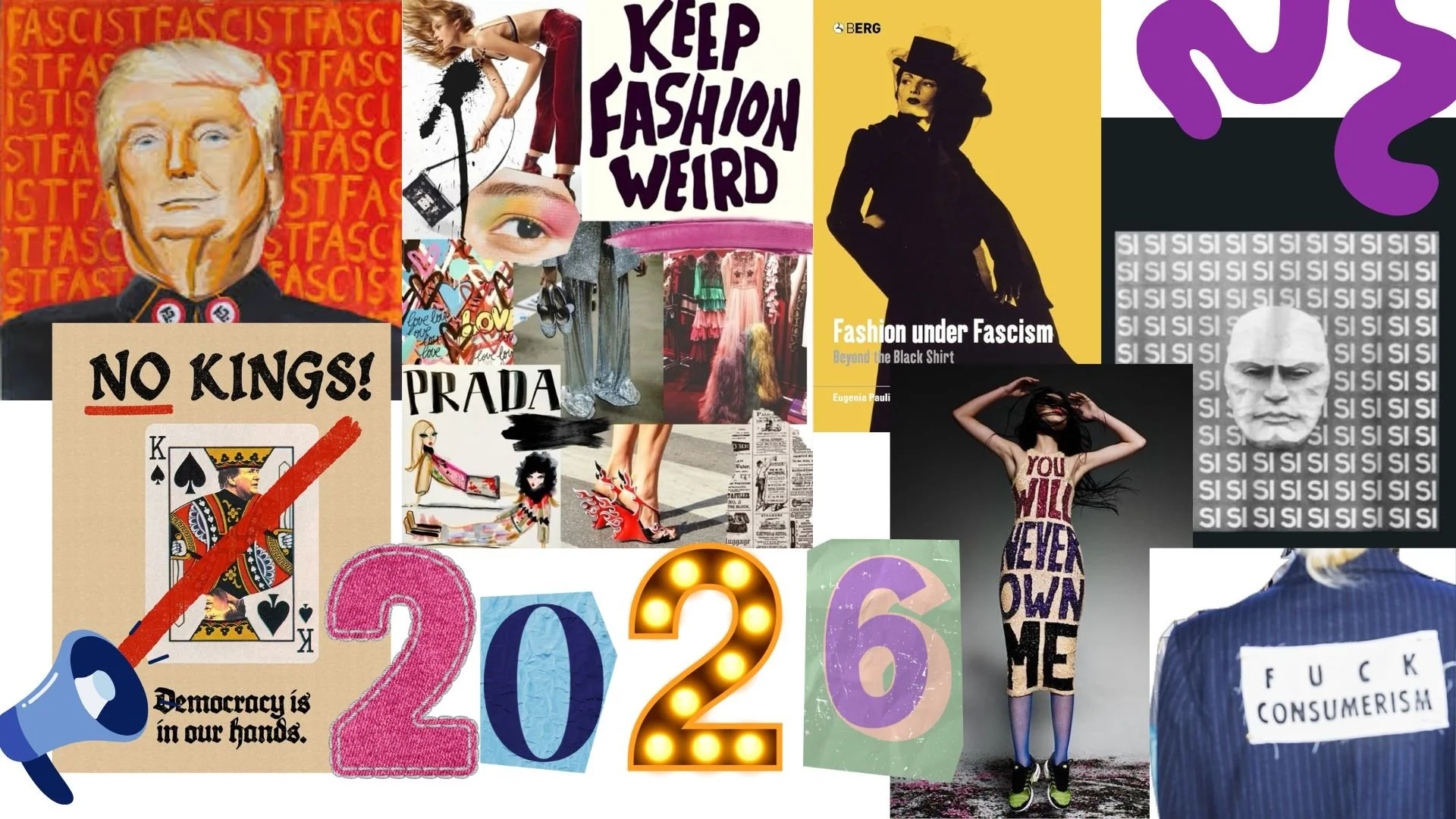
2026 and not giving a f*ck
In the early moments of 2026, a clear aesthetic and cultural shift has started to emerge. Colour has returned with intent. Playfulness, excess, and visual pleasure are no longer frivolous but deliberate—suggesting a collective desire to reclaim joy in a climate increasingly shaped by restriction, fatigue, and ideological rigidity. What appears on the surface as a stylistic turn is, in fact, deeply political.
History shows that extremist and authoritarian regimes follow a predictable arc. Early allegiance - often driven by fear, economic crisis, or promises of stability - eventually gives way to exhaustion. As power consolidates, disillusionment spreads, including those who once pledged loyalty to the system and its figureheads. Traditionally, this fracture has been made visible through riots, resistance movements, and mass protest.
In the digital age, however, dissent is no longer limited to physical confrontation. Fashion, culture, and aesthetics have become critical sites of resistance. Protest now circulates through images, silhouettes, memes, styling choices, and subcultures that reject uniformity and refuse ideological compliance. The body becomes a billboard; dress becomes language.
Against this backdrop, the resurgence of colour reads as refusal. To dress loudly in an era of enforced seriousness is to resist. To embrace excess in the face of austerity is to undermine it. Joy, once dismissed as apolitical, becomes a disruptive force—destabilising narratives that thrive on fear, control, and sameness.